Pengarang: Huirui
Tarikh: Apr 22, 2026
Jenis Meja: Pilihan Lipat, Plastik & Luaran Diterangkan
Jadual terbahagi kepada beberapa kategori luas berdasarkan struktur, bahan dan kegunaannya: meja makan, meja kopi, meja kerja dan utiliti, meja lipat dan meja luar. Bagi pembeli yang mengutamakan fleksibiliti, mudah alih dan nilai, meja lipat — terutamanya meja lipat plastik — ialah pilihan serba guna yang paling praktikal , mampu menyediakan acara dalaman, perhimpunan luar, bilik darjah, pejabat dan keperluan penyimpanan rumah. Memahami perbezaan antara jenis membantu anda memadankan jadual yang betul dengan tetapan dan belanjawan khusus anda.
Jenis-Jenis Meja Utama dan Untuk Apa Ianya Digunakan
Jadual direka bentuk untuk fungsi tertentu, dan kategori yang dimiliki jadual membentuk segala-galanya daripada ketinggian dan saiznya kepada bahan dan struktur kakinya. Berikut ialah gambaran keseluruhan jenis yang paling biasa:
Meja Makan
Meja makan direka bentuk untuk makan duduk dan biasanya berdiri pada ketinggian standard 28–30 inci (71–76 cm) . Mereka datang dalam bentuk segi empat tepat, bulat, bujur dan segi empat sama, daripada meja 2 orang padat (sekitar 24 × 36 inci) kepada sambungan besar yang memuatkan 12 atau lebih. Bahan termasuk kayu pepejal, kayu kejuruteraan, kaca, marmar dan logam.
Meja Kopi dan Aksen
Meja kopi duduk rendah — biasanya 16–18 inci (40–46 cm) tinggi — di hadapan sofa di ruang tamu. Meja sisi dan meja hujung ialah kepingan aksen yang diletakkan di sebelah perabot tempat duduk. Meja bersarang ialah varian padat: set 2–4 meja yang disusun di bawah satu sama lain untuk penyimpanan.
Meja Kerja, Meja dan Utiliti
Direka bentuk untuk prestasi tugas dan bukannya estetika, ini termasuk meja pejabat, meja kerja, meja draf dan meja berdiri boleh laras. Ketinggian selalunya berkisar antara 28 hingga 48 inci, dengan beberapa meja berdiri mencapai 50 inci. Mereka mengutamakan kawasan permukaan, kapasiti beban, dan ketahanan.
Meja Lipat
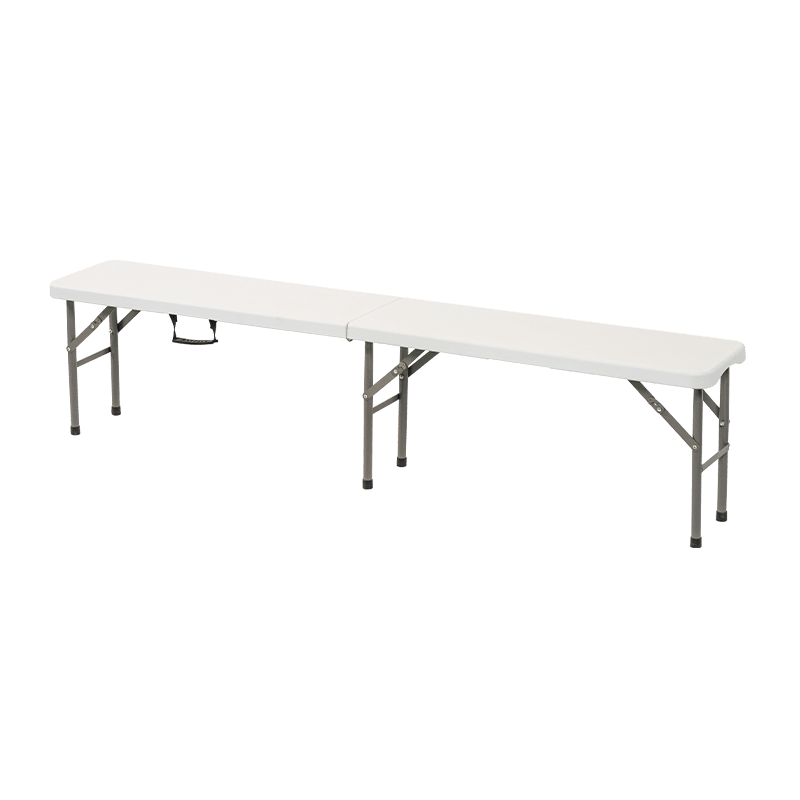
Meja lipat mempunyai kaki yang runtuh rata di atas meja untuk penyimpanan dan pengangkutan yang padat. Mereka adalah pilihan utama untuk acara, katering, sekolah, pusat komuniti dan isi rumah yang memerlukan ruang permukaan tambahan atas permintaan. Ia boleh didapati dalam kayu, keluli, aluminium dan plastik — dengan meja lipat plastik menjadi varian paling popular di seluruh dunia.
Meja Luar
Meja luar dibina daripada bahan tahan cuaca seperti kayu jati, aluminium bersalut serbuk, rotan resin dan plastik polietilena berketumpatan tinggi (HDPE). Ia termasuk meja makan patio, meja berkelah, meja bistro dan meja perkhemahan mudah alih. Keperluan yang menentukan ialah ketahanan terhadap kelembapan, sinaran UV, dan turun naik suhu.
Jadual Bar dan Kaunter Ketinggian
Meja bar berdiri di 40–42 inci (101–107 cm) tinggi dan digunakan bersama bangku bar. Meja kaunter ketinggian terletak di sekeliling 34–36 inci (86–91 cm) . Ia adalah perkara biasa di dapur, kawasan bar, restoran dan tempat makan kasual.
Meja Lipat: Types, Sizes, and Best Uses
Jadual lipat bukan satu produk — ia membentuk kategori yang pelbagai dengan beberapa subjenis yang berbeza, setiap satu dioptimumkan untuk konteks yang berbeza. Memilih jenis meja lipat yang betul boleh menjejaskan masa persediaan, keselesaan pengguna, kapasiti beban dan jejak storan dengan ketara.
Meja Lipat Jamuan
Jenis meja lipat yang paling banyak digunakan dalam tetapan komersil dan acara. Saiz standard ialah 4 kaki (48 × 24 inci), 6 kaki (72 × 24 atau 30 inci) dan 8 kaki (96 × 30 inci) . Meja jamuan boleh memuatkan 2–3 orang setiap 4 kaki, 4–6 setiap 6 kaki, dan 6–8 setiap 8 kaki apabila diletakkan di kedua-dua sisi. Ia digunakan untuk majlis perkahwinan, persidangan, jamuan, pengumpulan dana dan persediaan bilik darjah.
Meja Lipat Bulat
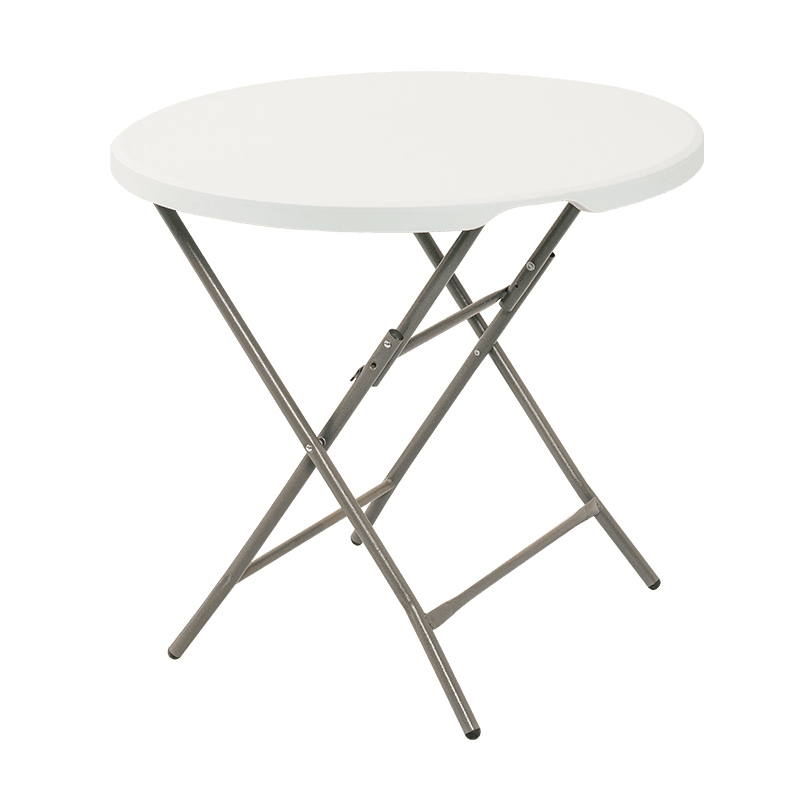
Meja lipat bulat mempromosikan perbualan bersemuka dan menjadi standard dalam majlis perkahwinan dan acara rasmi. Diameter biasa ialah 48 inci (tempat duduk 4–5), 60 inci (tempat duduk 6–8), dan 72 inci (tempat duduk 8–10) . Mereka biasanya mempunyai mekanisme kaki tengah yang dilipat dua untuk penyimpanan rata.
Meja Lipat Kad dan Koktel
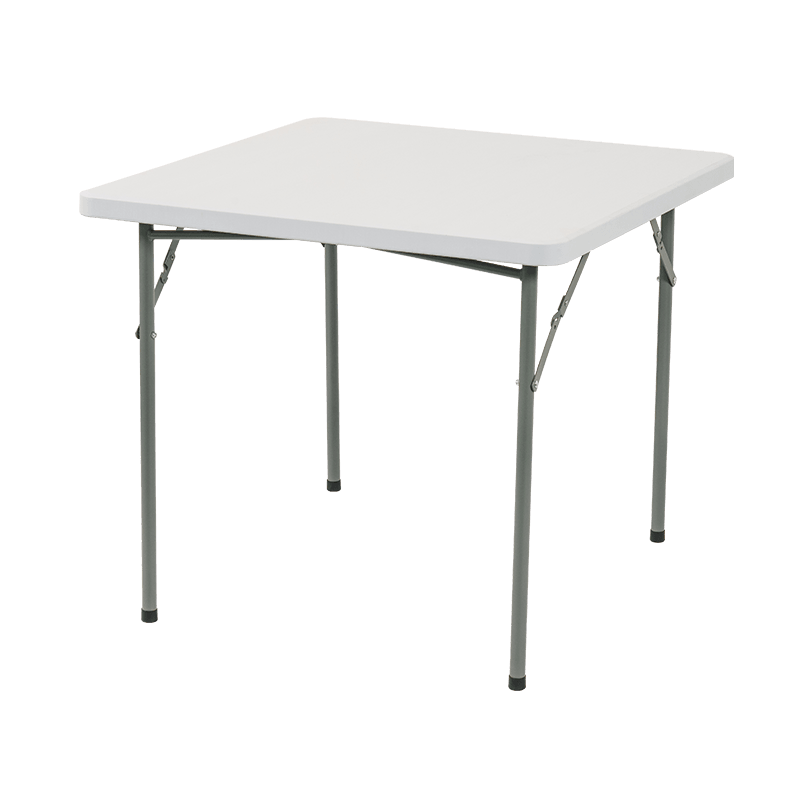
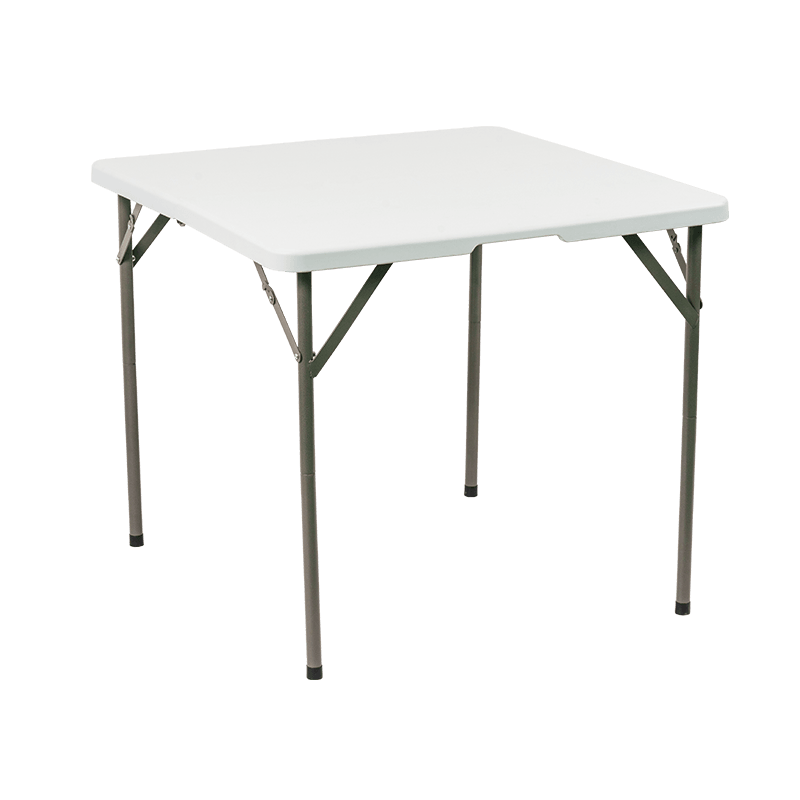
Meja lipat yang lebih kecil — biasanya 34 × 34 inci atau 36 × 36 inci — digunakan untuk permainan kad, perhimpunan kecil atau sebagai stesen sampingan. Meja lipat koktel lebih tinggi (ketinggian bar, 40–42 inci) dan digunakan pada majlis berdiri dan acara rangkaian.
Meja Lipat Ketinggian Boleh Laras
Ini membenarkan pelarasan ketinggian kaki - biasanya antara 24 dan 36 inci - berfungsi sebagai meja makan, meja aktiviti atau permukaan kerja rendah. Berguna untuk ruang pelbagai guna, aktiviti kanak-kanak dan keperluan kebolehcapaian.
Jadual Seminar dan Latihan
Lebih sempit daripada meja jamuan (biasanya 18–24 inci dalam), direka khusus untuk susunan bilik darjah atau bilik persidangan di mana orang hanya duduk di sebelah. Panjang standard 6 kaki atau 8 kaki membolehkan berbilang jadual disusun dalam baris atau bentuk-U.
Meja Lipat Plastik: Mengapa Mereka Menguasai Pasaran
Antara semua bahan meja lipat — kayu, keluli, aluminium dan plastik — meja lipat plastik menyumbang bahagian terbesar jualan global merentasi pembeli kediaman, komersial dan institusi. Penguasaan mereka datang daripada gabungan kelebihan praktikal yang tidak dapat direplikasi sepenuhnya oleh bahan lain.
Meja Lipat Plastik Diperbuat Daripada Apa
Kebanyakan meja lipat plastik mempunyai permukaan meja yang diperbuat daripada polietilena berketumpatan tinggi (HDPE) atau polietilena acuan tiupan — termoplastik yang terkenal dengan rintangan hentaman, rintangan kimia dan kestabilan UV. Kaki biasanya keluli (bersalut serbuk untuk rintangan kakisan) atau aluminium. Model premium menggunakan binaan acuan tiupan dua dinding yang mencipta bahagian dalam berongga untuk pengoptimuman kekuatan kepada berat.
Kelebihan Utama Meja Lipat Plastik
- Ringan — meja lipat plastik 6 kaki standard mempunyai berat 15–22 lb (7–10 kg), berbanding 25–35 lb untuk meja lipat atas kayu yang setanding.
- Tahan lembapan — bahagian atas plastik tidak akan meledingkan, membengkak atau reput apabila terdedah kepada tumpahan atau kelembapan, tidak seperti MDF atau meja lipat teras papan lapis.
- Mudah dibersihkan — permukaan HDPE yang tidak berliang boleh disapu dengan sabun dan air atau dinyahjangkit dengan agen pembersih standard, menjadikannya sesuai untuk perkhidmatan makanan, penjagaan kesihatan dan sekolah.
- Muatan kapasiti — sokongan meja lipat plastik berkualiti 750–1,000 lb (340–454 kg) beban statik , mencukupi untuk hampir semua perkhidmatan makanan, paparan dan aplikasi kegunaan am.
- Kos efektif — harga runcit untuk meja lipat plastik 6 kaki standard antara $40 hingga $120, jauh di bawah model kayu atau aluminium yang setanding.
- Pilihan warna — tersedia dalam kemasan putih, kuning air, hitam, kelabu dan bijirin kayu, membolehkan mereka digabungkan dengan estetika acara yang berbeza.
Had Meja Lipat Plastik
- Kurang kelas atas dari segi visual daripada meja kayu atau logam — biasanya tidak digunakan sebagai permukaan meja kosong untuk tetapan makan malam formal tanpa alas meja.
- Permukaan plastik boleh tercalar pada penggunaan yang berat dan berulang, walaupun ini terutamanya kosmetik.
- Bahagian atas plastik berkualiti rendah (berdinding nipis, acuan suntikan) boleh melentur dengan ketara di bawah beban tertumpu — spesifikasi ketebalan atas dan perkara pembinaan apabila membandingkan model.
Panduan Saiz Meja Lipat Plastik
| Saiz | Dimensi (lebih kurang) | Tempat duduk (kedua-dua belah) | Penggunaan Terbaik |
|---|---|---|---|
| 4 kaki | 48 × 24 × 29 in | 2–4 orang | Acara kecil, paparan vendor, kegunaan rumah |
| 5 kaki | 60 × 30 × 29 in | 4–6 orang | Acara sederhana, perhimpunan keluarga |
| 6 kaki | 72 × 30 × 29 in | 6–8 orang | Jamuan, persidangan, perkhidmatan makanan |
| 8 kaki | 96 × 30 × 29 in | 8–10 orang | Acara besar, pameran perdagangan, bilik darjah |
| Pusingan 60 in | 60 in diameter × 29 in | 6–8 orang | Perkahwinan, resepsi, acara rasmi |
Meja Lipat Plastik Luaran: Apa yang Menjadikan Mereka Berbeza
Tidak semua meja lipat plastik dibina untuk kegunaan luar. An meja lipat plastik luar mesti mengendalikan pendedahan berterusan kepada cahaya matahari, hujan, angin dan perubahan suhu yang akan merendahkan model dalaman standard dalam satu musim. Perbezaannya terletak pada spesifikasi bahan, pembinaan kaki, dan rawatan permukaan.
Bahagian Atas HDPE yang Distabilkan UV
Meja lipat plastik berkadar luar menggunakan HDPE yang digabungkan dengan Penstabil UV dan bahan tambahan karbon hitam atau penyerap UV yang menghalang fotodegradasi. Bahagian atas plastik dalaman standard akan pudar, kuning dan menjadi rapuh selepas pendedahan UV yang berpanjangan — kadangkala dalam 1–2 musim. Bahagian atas yang distabilkan UV mengekalkan integriti warna dan struktur untuk 5–10 tahun atau lebih dengan penggunaan luar biasa.
Rangka Kaki Tahan Kakisan
Kaki keluli pada meja lipat luar mesti dilindungi daripada karat. Penggunaan model luaran berkualiti keluli tergalvani atau keluli bersalut serbuk dengan ketebalan lapisan minimum 2–3 mil . Meja luar premium menggunakan kaki aluminium, yang secara semula jadi kalis kakisan dan mengurangkan berat keseluruhan. Kaki kaki hendaklah mengandungi penutup getah atau nilon untuk mengelakkan kemasukan air dan melindungi permukaan.
Saliran Permukaan dan Rintangan Angin
Sesetengah meja lipat plastik luar mempunyai permukaan bertekstur sedikit atau matte yang mengurangkan silau dan meningkatkan cengkaman dalam keadaan basah. Untuk tempat terdedah, meja yang lebih berat (22–30 lb) menentang anjakan angin lebih baik daripada model ultralight. Meja yang digunakan di atas rumput atau rupa bumi yang tidak rata mendapat manfaat daripada perata kaki boleh laras — ciri yang semakin tersedia pada model luar komersial.
Kes Penggunaan Luaran Terbaik
- Pesta belakang rumah dan BBQ - mudah disalurkan selepas digunakan; tahan terhadap tumpahan makanan dan minuman.
- Perkhemahan dan tailgating — model ringan (15–18 lb) dilipat ke dalam bungkusan padat yang muat di dalam bagasi kereta.
- Pasar tani dan acara vendor luar — Model 6 kaki dan 8 kaki berfungsi sebagai paparan produk dan permukaan transaksi yang boleh disediakan dan dipecahkan dalam masa kurang dari 60 saat.
- Acara luar sekolah dan komuniti — disimpan secara pukal, boleh disusun pada boneka, mudah diangkut dan disapu bersih.
- Simpanan luaran kekal — Meja yang distabilkan UV boleh disimpan di luar di bawah penutup tanpa degradasi bahan, tidak seperti meja lipat kayu yang memerlukan penyimpanan dalaman.
Perbandingan Bahan Meja Lipat: Plastik lwn Kayu lwn Aluminium
| Faktor | Plastik (HDPE) | Kayu / MDF | aluminium |
|---|---|---|---|
| Berat (6 kaki meja) | 15–22 lb | 25–35 lb | 12–18 lb |
| Rintangan air / kelembapan | Cemerlang | Miskin–Adil | Cemerlang |
| Ketahanan UV / luaran | Baik (menstabilkan UV) | miskin | Cemerlang |
| Estetika permukaan | Berfungsi | Rupa premium | Perindustrian / bersih |
| Harga (meja 6 kaki) | $40–$120 | $80–$200 | $100–$250 |
| Kemudahan pembersihan | Sangat mudah | Sederhana | Sangat mudah |
| Terbaik untuk di luar rumah | Ya (menstabilkan UV) | Tidak | ya |
Bagi kebanyakan pembeli — sama ada melengkapkan perniagaan penyewaan acara, pusat komuniti atau halaman belakang — meja lipat plastik memberikan keseimbangan kos, berat, rintangan cuaca dan kesederhanaan penyelenggaraan yang terbaik . Tepi aluminium di hadapan hanya di mana penjimatan berat maksimum mewajarkan premium harga 2×.
Cara Memilih Meja Lipat yang Tepat untuk Keperluan Anda
Dengan begitu banyak pilihan yang tersedia, mengecilkan jadual lipat kanan datang kepada empat soalan praktikal:
- Di mana ia akan digunakan? — Untuk kegunaan luaran sahaja atau bercampur dalam/luar, pilih bahagian atas plastik yang distabilkan UV dengan kaki bersalut serbuk atau aluminium. Untuk kegunaan dalaman sahaja, sebarang kerja bahan dan bahagian atas teras kayu menawarkan penampilan yang lebih siap.
- Berapa orang yang perlu duduk? — Gunakan panduan saiz di atas. Meja jamuan 6 kaki ialah pilihan serba guna serba guna, tempat duduk 6–8 setiap meja sambil sesuai dengan susun atur acara standard.
- Berapa kerapkah ia akan dipindahkan? — Untuk pengangkutan yang kerap, utamakan berat: cari meja lipat plastik di bawah 20 lb untuk pengendalian seorang yang mudah. Jika meja akan dialihkan secara pukal, pilih model yang serasi dengan boneka meja lipat (biasanya dijual berasingan, memuatkan 10–15 meja).
- Apakah beban yang akan dibawanya? — Untuk perkhidmatan makanan dan tempat duduk standard, mana-mana meja yang dinilai pada 500 lb atau lebih adalah memadai. Untuk paparan peralatan berat, barangan pameran perdagangan, atau kegunaan industri, nyatakan jadual yang dinilai pada 750–1,000 lb beban statik .
Menjaga Meja Lipat Plastik untuk Memaksimumkan Jangka Hayat
Meja lipat plastik adalah penyelenggaraan yang rendah, tetapi beberapa amalan memanjangkan hayat perkhidmatannya dengan ketara — terutamanya untuk model luar yang terdedah kepada luluhawa sepanjang beberapa musim.
- Bersihkan selepas setiap penggunaan - lap dengan sabun lembut dan larutan air. Untuk sanitasi, larutan peluntur yang dicairkan (1 sudu besar peluntur setiap gelen air) adalah selamat pada HDPE tanpa menyebabkan kerosakan permukaan.
- Simpan dilipat dan disusun — susun tidak lebih daripada 10–12 meja tinggi untuk mengelakkan meja bawah melengkung di bawah pemampatan yang berpanjangan. Gunakan dolly untuk penyimpanan dan pengangkutan untuk mengurangkan tekanan sentuhan lantai.
- Lindungi engsel kaki — sapukan pelincir kering (semburan silikon) secara berkala pada engsel kaki untuk mengelakkan operasi kaku dan kakisan, terutamanya pada meja yang disimpan dalam persekitaran lembap atau luar.
- Elakkan daripada menyeret — menyeret meja berlipat pada sudutnya menekankan plastik pada titik lampiran engsel. Sentiasa bawa atau gunakan dolly.
- Simpan daripada UV langsung apabila boleh — malah meja yang distabilkan UV mendapat manfaat daripada storan berbumbung (kandang atau tarp) semasa tempoh tidak digunakan yang berpanjangan, melambatkan degradasi permukaan dan mengekalkan warna lebih lama.
Pameran Produk Pilihan